Assessment of the effects of defoliation on freshwaters to inform insect outbreak control strategies in boreal and hemi-boreal forests
Abstract
Defoliation by insects affects more of the North American boreal forest than wildfire and forest harvest combined, with Eastern Spruce Budworm (Choristoneura fumiferana) as the most prevalent defoliator. Control strategies vary in cost and degree of defoliation suppression, so informed decisions rely on understanding the broader impacts of defoliation. Little is known about how defoliation impacts downstream freshwaters – an important gap to address given growing recognition of the need to protect freshwater resources. We use a standardized benthic macroinvertebrate (BMI) bioindicator approach to compare streams in defoliated and undefoliated watersheds. We find dissimilarity in BMI community composition between streams in defoliated and undefoliated watersheds with a resulting influence on regional diversity. Despite differences in composition, diversity metrics were not correlated to defoliation nor …
abstract: “Defoliation by insects affects more of the North American boreal forest than wildfire and forest harvest combined, with Eastern Spruce Budworm (Choristoneura fumiferana) as the most prevalent defoliator. Control strategies vary in cost and degree of defoliation suppression, so informed decisions rely on understanding the broader impacts of defoliation. Little is known about how defoliation impacts downstream freshwaters – an important gap to address given growing recognition of the need to protect freshwater resources. We use a standardized benthic macroinvertebrate (BMI) bioindicator approach to compare streams in defoliated and undefoliated watersheds. We find dissimilarity in BMI community composition between streams in defoliated and undefoliated watersheds with a resulting influence on regional diversity. Despite differences in composition, diversity metrics were not correlated to defoliation nor …” authors:
- E_Emilson
- M_McCaig
- S_Capell
- Karen A Kidd
- E_Smenderovac
- Michael Stastny
- L_Venier featured: false projects: [] publication: ‘Canadian Journal of Forest Research’ publication_short: '' publication_types:
- “2” date: ‘2026-02-12T00:00:00Z’ publishDate: ‘2026-04-01’ title: ‘Assessment of the effects of defoliation on freshwaters to inform insect outbreak control strategies in boreal and hemi-boreal forests’ url_pdf: “https://cdnsciencepub.com/doi/pdf/10.1139/cjfr-2025-0288" url_source: “https://cdnsciencepub.com/doi/abs/10.1139/cjfr-2025-0288"

Erik J.S. Emilson
Research Scientist, Watershed Ecology Team Lead, Associate Editor CJFR
I am interested in how forests support freshwater ecosystem services. My research combines microbial and molecular approaches to undertand how forest productivity and disturbances affect ecosystem functions in headwater streams and lakes.

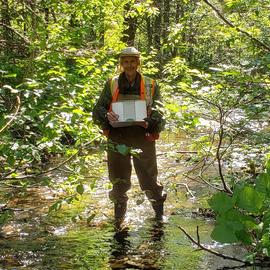
Scott Capell
Environmental Technician
Environmental Technician for both field and lab work on environmental effects
Emily Smenderovac
Watershed Ecologist
Trained in microbial ecology and bioinformatic analysis of community datasets.
Lisa Venier
Research Scientist
I research biota (large and small) as indicators of sustaniable forest management