Biotic Responses to Fire Disturbance in Canada
Abstract
Wildfires are ecological disturbances that drive rapid and often long-lasting changes to biological communities in forest ecosystems. This review synthesizes post-fire responses across microbial (fungi and bacteria), insect and other invertebrate, landbird, forest-dwelling mammal, and aquatic communities, with an emphasis on Canadian forest ecosystems. Taxa show variable spatial and temporal responses to fire, with some exhibiting obvious fire-adapted traits or behaviour and others appearing less resistant or resilient, or both. While advances in molecular tools have significantly enhanced capabilities for detecting and characterising microbial community responses to disturbance, overall, their responses remain generally understudied in Canada, particularly outside of western boreal forests. Insect responses range from mortality and habitat loss to population increases in fire-adapted species, with fire-insect …
abstract: “Wildfires are ecological disturbances that drive rapid and often long-lasting changes to biological communities in forest ecosystems. This review synthesizes post-fire responses across microbial (fungi and bacteria), insect and other invertebrate, landbird, forest-dwelling mammal, and aquatic communities, with an emphasis on Canadian forest ecosystems. Taxa show variable spatial and temporal responses to fire, with some exhibiting obvious fire-adapted traits or behaviour and others appearing less resistant or resilient, or both. While advances in molecular tools have significantly enhanced capabilities for detecting and characterising microbial community responses to disturbance, overall, their responses remain generally understudied in Canada, particularly outside of western boreal forests. Insect responses range from mortality and habitat loss to population increases in fire-adapted species, with fire-insect …” authors:
- Joey B Tanney
- Kathy Bleiker
- Samuel Haché
- Christian Hébert
- Karen E Hodges
- François-Nicolas Robinne
- Junior A Tremblay
- Thea Whitman
- Jason Leach
- E_Emilson
- Sean Naman
- Stephen W Taylor
- Kendrick J Brown featured: false projects: [] publication: ‘Environmental Reviews’ publication_short: '' publication_types:
- “2” date: ‘2026-01-16T00:00:00Z’ publishDate: ‘2026-04-01’ title: ‘Biotic Responses to Fire Disturbance in Canada’ url_pdf: “https://cdnsciencepub.com/doi/pdf/10.1139/er-2025-0200" url_source: “https://cdnsciencepub.com/doi/abs/10.1139/er-2025-0200"
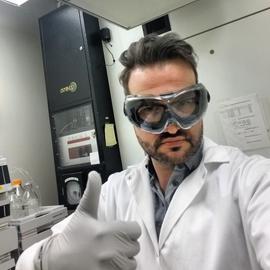
Erik J.S. Emilson
Research Scientist, Watershed Ecology Team Lead, Associate Editor CJFR
I am interested in how forests support freshwater ecosystem services. My research combines microbial and molecular approaches to undertand how forest productivity and disturbances affect ecosystem functions in headwater streams and lakes.